
2019 - what a year ! A year of reforms to copyright laws around the globe; an ongoing debate about the role of Artificial Intelligence, both in the creation of copyright and in the enforcement of copyright; the ever developing ways in which copyright can be infringed; new ways in in which uses and indeed users might be protected by technology; ever developing concepts such as fair use and fair dealing; and the exceptions to copyright - these were just some of our favourite themes in 2109.

JANUARY 1st 2019 saw a “public domain day” in the United States as a large number of films, books, songs, and artistic works once protected by US copyright, and all from the year 1923, fell into the public domain, including Marcel Duchamp’s original “The Bride Stripped Bare By Her Bachelors, Even (The Large Glass)”. Other works included Kahil Gibran’s "The Prophet", Virginia Woolf’s "Jacob’s Room", Agatha Christie’s "The Murder on the Links", Marcel Proust’s "The Prisoner" (La Prisonnière, vol. 5 of In Search of Lost Time), William Carlos Williams’s "The Great American Novel", H. G. Wells’s "Men Like Gods", AND any poem from Robert Frost’s Pulitzer Prize-winning compendium New Hampshire. Cinemas cOULD now screen Cecil B. DeMille’s The Ten Commandments, Charlie Chaplin’s The Pilgrim, Buster Keaton’s Our Hospitality, or Rin Tin Tin’s Where the North Begins. And theatres can have performances of songs from Noël Coward’s London Calling! or George Gershwin’s Stop Flirting without having to pay a royalty. The Chip Woman’s Fortune, the first drama by an African-American author produced on Broadway, also entered the public domain2019 also opened with the news that that a court in southern China has upheld the country's largest ever fine of 260 million yuan (37 million U.S. dollars) for copyright infringement against a media player software company Qvod. The official website of the Guangdong Court said that the Supreme People's Court of Guangdong Province had rejected an appeal against the fine. It ruled that the penalty was justified and the Shenzhen marketing supervisor, the local regulator, had the right to impose it on the Shenzhen-based company. We also had the first inklings of a lawsuit brought by the representatives of the former band Nirvana who sued designer Marc Jacobs for copyright infringement on the basis that the fashion brand’s Redux Grunge collection featured several items that allegedly resembled the Seattle grunge band’s black-and-yellow iconography. Advocate General Maciej Szpunar advised CJEU to rule that quotation exception in EU law is not limitless and that there is no fair use in the EU - and that (1) the exception within Article 5(3)(d) of the InfoSoc Directive requires one to consider the purpose of the quotation at issue, and (2) fundamental rights like freedom of expression do not allow EU Member States to go beyond the catalogue of exceptions in Article 5 to envisage new exceptions, or even introduce a general fair use clause. And finally in January (and remembering our need to always feature AT LEAST ONE Star Wars update (even better if on May 4th of course) news broke that Lucasfilm and Disney had lifted the copyright claim on a Star Wars Theory’s Darth Vader 'Fan Film'. It seems pressure by Lucasfilm led to a change of heart by Disney, and the film stayed up!

 MARCH opened with the news that the US Supreme Court had finally resolved the controversy surrounding copyright registration in the US: The US Copyright Act, 17 U.S.C. § 411(a), states that “registration" of a copyright is a precondition to filing suit for copyright infringement. Some courts of appeal interpreted “registration” as meaning “filing an application to register the copyright” while others interpreted it as “the Register of Copyrights registers the copyright.” In their decision in Fourth Estate Public Benefit Corp. v. Wall Street LLC. The US Supreme Court resolved the circuit courts split and ruled that registration occurs when the Copyright Office registers the copyright. Only after that may a plaintiff file a copyright infringement suit. However, once the copyright is registered, the owner can recover for infringement which occurred both before and after the registration. In Rimini Street, Inc. v. Oracle USA, Inc. the Court, relying on statutory text and precedent, held that the Copyright Act's provision for the discretionary award of "full costs" does not allow courts to award costs beyond the categories enumerated in the general "costs" statute. Also in the US,a Grand Theft Auto V 'cheat maker' was been ordered to pay $150,000 in copyright damages: Rockstar Games' parent company Take-Two Interactive won a default judgment against the developer of the GTA V cheat maker "Elusive". The Florida-based defendant was ordered to pay the defendant company $150,000 - the maximum that could be awarded as copyright infringement damages. Then news broke that defendant Erik Cameron has now admitted to copyright infringement, breach of the game's End User License Agreement, and profiting from his violations of the law, and would pay Take-Two an undisclosed sum. Cameron was also permanently prohibited from developing, promoting, or using any software program that alters Take-Two's owned software in any way, creating derivative works, or otherwise encouraging others to follow in his footsteps. It had all been going so smoothly - but in March US publishers and songwriters hit out at an appeal made by the US streaming services, including Amazon and Spotify, who formally objected to the mechanical royalty rate set by the Copyright Royalty Board (CRB) ruling, with royalty rates for streaming and other mechanical uses set to rise 44% for the compulsory licences over the next five years. That decision was ratified in February when the CRB published the final rates and terms for songwriters. The top line revenue share figure to be paid by streaming services will rise, over a number of years, from 10.5% to 15.1%. Apple Music declined to appeal, but Spotify and Amazon both filed a notice of appeal. Pandora and Google have also asked the CRB to review its decision. In a statement the National Music Publishers Association (NMPA) said that a “huge victory for songwriters is now in jeopardy” due to the streaming services’ filings. The NMPA called the appeal a “shameful” move which equated to “suing songwriters”. The case between Nirvana and Marc Jacobs was back in the news, with the fashion brand seeking to have the copyright infringement case dismissed; Jacobs questioned whether Nirvana LLC even owned the copyright in the happy face illustration (that was seemingly created by the deceased Kurt Cobain). It then argued that - while its happy face t-shirts are clearly influenced by the iconic Nirvana merchandise, the imagery on its garments is sufficiently different to not constitute copyright infringement. Jacob's also notes that its products don't include the text "flower-sniffin, kitty-pettin, baby-kissin corporate rock whores" which was on the back of the band's original shirts. And where the Nirvana t-shirts bore the band's name, Jacobs' say 'Heaven', albeit in a very similar font. And finally, The EU's somewhat controversial copyright reforms were adopted by the European Parliament, with 348 votes in favor and 274 against in the European Parliament, meaning Articles 13 and 11 are one step further on to becoming enshrined in EU law. In the wake of the vote, the chair of ICMP, the global trade body for music publishing, Chris Butler said: “We extend our appreciation to MEPs across party lines and EU Member States for their hard work through this challenging legislative process. We are grateful for important provisions supporting songwriters and composers, recognising that music must be given its rightful value. “We're particularly pleased to secure sector-specific safeguards for music publishers in Articles 4 and 12. These battles were hard-fought, amount to crucial wins for music in Europe and are particularly important for our independent publisher members.” ICMP Director General John Phelan commented: “Four years of titanic tussling later, our work to solve the ‘Value Gap’ now begins a new stage after this vote. Namely, to ensure that those who make the music make a fair return. ICMP will keep working with all European governments to transpose this law appropriately. ‘Safe Harbours’ must not become archipelagos for platforms to devalue music. Today redoubles our determination in that mission.” Pirate Party MEP Julia Reda tweeted that voting on individual amendments were rejected by a majority of just 5 votes, before tweeting "Dark day for internet freedom: The @Europarl_EN has rubber-stamped copyright reform including #Article13 and #Article11. MEPs refused to even consider amendments".
 At the beginning of APRIL we published a very interesting update from Hayleigh Bosher on the ongoing relationship between creativity and Artificial Intelligence, and the news that Warner Music, the multinational entertainment and record label, the third largest in the global music industry, with artists from Ed Sheeran, Coldplay, Madonna to Led Zeppelin.

 | |||
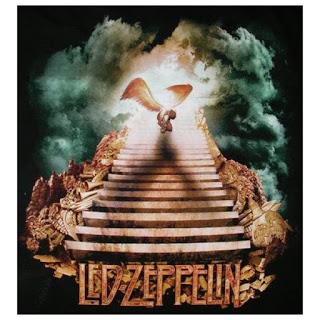
Accordingly, for there to be a “work” as referred to in Directive 2001/29, the subject matter protected by copyright must be expressed in a manner which makes it identifiable with sufficient precision and objectivity, even though that expression is not necessarily in permanent form. In the Islestarr case, Deputy Master Linwood used the examples of the copyright protection granted to sand sculptures that are washed away by the tide - and a personalised wedding cake that will be eaten can still constitute a copyright work. Analysing the 'thin' copyright provision in the US, the US Department of Justice, giving reasons akin to that of the trial judge, sided with Led Zeppelin in the Stairway to Heaven case. The DoJ's amicus brief went on to claim that the Ninth Circuit was wrong to overturn the finding of the lower court which stated the compared compositions were sufficiently similar for copyright infringement. The U.S. government explained that "even if deposit copies do not capture all details of a composition, they generally include the elements of a song, such as the melody and lyrics, that are of most importance to the copyright owner. Failure to incorporate elements such as these in the deposit copy would reflect a failing on the part of the copyright owner or its agent, not an insurmountable obstacle imposed by the statutory scheme." The Amicus Brief argues that the only similarity between the allegedly infringing work and the original is the selection and arrangement of two basic musical elements: an A minor chord and a descending chromatic scale. These have argued to not substantially be the base of the challenge as a small standard selection and arrangement gets a fairly thin copyright protection due to the “creative” standard of Originality being prevalent in the United States. And a total of 123 musicians and recording artists joined in, publicly supporting the British rock band in their arguments saying that unless the 9th Circuit reversed the decision it would set a dangerous precedent that would be hugely detrimental to songwriting and an assumption that “trivial and commonplace similarities between two songs could be considered to constitute the basis for a finding of infringement” and that this would confuse artists, stifle creativity, and result in “excessive and unwarranted” litigation by artists and lawyers seeking to profit from ambiguities in the law. Turning to music sampling, sampling: The European Court of Justice sided with German electronic music pioneers Kraftwerk against against hip-hop producers Moses Pelham and Martin Haas, ruling that unauthorised sampling of even brief clips of a sound recording can constitute copyright infringement as long as they are recognisable. Kraftwerk brought the action in 1999 over the Sabrina Setlur track “Nur Mir”, where Pelham and Haas used a two-second snippet of Kratfwerk's “Metall auf Metall” as a loop. In 2012, Germany's Federal Court Of Justice found in favour of Kraftwerk, in part on the basis that Pelham could have easily recreated the sound he sampled, so clipping the snippet out of 'Metal On Metal' was just laziness. Four years later the German Constitutional Court overturned that judgement, deciding Pelham's "artistic freedom" had to be considered - and that the negative impact on Kraftwerk caused by the uncleared sample wasn't sufficient to outweigh the sampler's artistic rights. The case was then referred to the CJEU who gave the win to Kratwerk. Making clear the difference between sampling a recording and copying part (or all) of a song, Advocate General Maciej Szpunar wrote in his opinion "A phonogram is not an intellectual creation consisting of a composition of elements such as words, sounds, colours etc. A phonogram is a fixation of sounds which is protected, not by virtue of the arrangement of those sounds, but rather on account of the fixation itself" adding "Consequently, although, in the case of [other creative works], it is possible to distinguish the elements which may not be protected, such as words, sounds, colours etc, from the subject-matter which may be protected in the form of the original arrangement of those elements, such a distinction is not, however, possible in the case of a phonogram". And finally in August, and in a decision that was echoed as the year ended over the pond, Dailymotion was ordered to pay €5.5m in damages to Italian broadcaster Mediaset with the Rome court saying that Dailymotion was “entirely aware” of copyright infringement on it's platform and that safe harbour protection available to intermediaries would not apply if the intermediary did not fulfil the criteria set out in the EU E-Commerce Directive, which is the origin point of the EU Safe Harbour norms - here for failing to have a filtering mechanism and a system to automatically remove infringing content,
 |
| Buste de femme (Dora Maar) by Pablo Picasso |

OCTOBER. Current chair of the House Judiciary Committee, Jerrold Nadler, aired his thoughts on what might be the next challenges for legislating for music copyright in the USA. Prioritising the unity that led to the unanimous passage of the Music Modernization Act, Nadler opined "If you want real legislation, the different segments of the industry have to get their act together and speak with one voice," and admitting that most members of Congress aren't well-versed in music industry particulars. "Once they did that, we were able to pass legislation unanimously." Nadler then highlighted that odd anomaly in the US where there is no performing right for recorded music that are the staple of terrestrial AM/FM radio play - an almost unique position in the World adding "As terrestrial radio becomes relatively less important and streaming becomes more, the question is the extent to which broadcasters will see their interests as less opposed to performance rights. At some point, I do think we will get some [agreement], because the National Association of Broadcasters (NAB) and their people will see that their interests are less adversely affected than previously." Queen joined the long list of bands who have taken action against President Trump for using their music without permission. A campaign video featuring 'We Will Rock You' was removed from the President's Twitter feed following a copyright complaint from the band’s publisher. According to Buzzfeed, within hours of the video going live Queen had "already entered into a process to call for non use of Queen song copyrights by the Trump campaign”. After being viewed more than 1.7 million times, the video was disabled by Twitter and the post now reads: "This media has been disabled in response to a report by copyright owner.” They join REM, Prince, Neil Young, Rihanna, Nickleback and Adele (amongst others) who have objected to Trump using their music. More details on Nickleback's recent takedown can be found here. A Twitter spokesperson told CNN that the company responds to copyright complaints sent to them by a copyright owner or their authorised representatives. US comedian Jerry Seinfeld defeated a lawsuit which alleged he had stolen the idea for a TV series. But the case was decided on basis that the statute of limitations must bar the claim - and not on any infringement or otherwise. Christian Charles, a former colleague claimed he had originally pitched the idea for "Comedians in Cars Getting Coffee" to Seinfeld in 2002 - a decade before it debuted. Manhattan District judge Alison Nathan said Charles had taken too long to sue, The statute of limitations applies after three years and Charles had waited for six years to file his lawsuit after Seinfeld rejected his copyright claim in 2012, the year the first series of the show aired. In other news, The U.S. House of Representatives voted 410-6 in favor of the Copyright Alternative in Small-Claims Enforcement Act of 2019, Seeking to address the high cost of copyright litigation, when passed into law, the CASE Act will create a voluntary 'small claims court' within the U.S. Copyright Office, called the Copyright Claims Board. Its not without criticism: the American Civil Liberties Union argued the Act lacked procedural safeguards and could be abused by “copyright trolls” or by those seeking to silence free speech on the internet - and expose millions of Americans to liability who unknowingly violate copyright law for actions seemingly as petty as sharing photos online. And apart from the US of A? Well in London Hugo Cox explained the case of Kogan v Martin, a case concerning the screenplay for Florence Foster Jenkins. The question was whether it had been written solely by Nicholas Martin, as had been decided in the Intellectual Property Enterprise Court in 2017, or whether Julia Kogan was joint author. The Court of Appeal was not content with the reasoning of the lower court and ordered a retrial. Why? Well it seemed Martin had held the pen and Kogan had contributed only to the first drafts. However, the Court emphasised a joint author can be someone who only offers suggestions to the writer – she does not necessarily have to put pen to paper or have the last word on what goes into the script. Contributions to plot ideas or inventing characters are on an equal footing with contributions to the execution of a work. And if a work has been created through a series of drafts, inputs into the earlier drafts count.

NOVEMBER. In the big news, the US The Supreme Court agreed to hear the appeal by Google in the case where Oracle accused the tech giant of violating copyright laws when developing its Android mobile platform. The court's decision to hear the case comes more than a year and a half after the U.S. Court of Appeals for the Federal Circuit ruled against Google, saying the company's unauthorized use of 11,500 lines of code in Oracle's open-source Java application programming interface was not fair use, and will provide the final say in the 2013 claim accused Google of infringing the copyright on its Java APIs in the development of Google’s Android OS. Google denied any wrongdoing and has argued, in part, that software APIs cannot be protected under US copyright law. We opened this review of the year with a mention of AI, and with the advent of the concept of “Computer-generated works”, and with the recent advancement in the role of AI in curation of art-based copyrightable works, this debate has gained even more importance and is now the subject of a number of major academic conferences and seminars, with the question surrounding the most appropriate path to be taken by lawmakers and courts. The US Patent and Trademark Office launched a public consultation in this matter and issued a request for comments on IP protection of AI based innovation, on or before 16th December. The notice reads: “Artificial Intelligence (AI) technologies are increasingly becoming important across a diverse spectrum of technologies and businesses. AI poses unique challenges in the sphere of intellectual property law. At a January 31, 2019 conference on ‘‘Artificial Intelligence: Intellectual Property Policy Considerations,’’ USPTO explored a number of those challenges. On August 27, 2019, the USPTO published a request for comment regarding AI’s impacts on patent law and policy. As a continuation of this work, the USPTO is also considering the impact of AI on other intellectual property rights.” Nigeria emphasized, via its Copyright Commission, a will to stamp out Piracy in totality. Vincent Oyefeso, the commision’s director of public affairs,said:"The NCC is not just a compliance agency, it has the power to arrest and prosecute anybody caught pirating other people’s intellectual properties.” and “Copyright owners could institute civil suit against copyright offenders, apart from the criminal suit the commission normally institutes against such offenders.” And Hypebot reported that despite an acknowledgement that the the 1923 song “Yes! We Have No Bananas” by composers Irving Cohn and Frank Silver had slipped into the public domain, Universal Music stepped up to claim ownership. Glenn Fleishman had posted a video of the song to YouTube in celebration of it entering the public domain earlier this year. He even titled it “Yes! We Have No Bananas, now in the public domain.” The video is of him and his friends and family singing it at a New Year’s Eve Party: However, Hypebot says that video has now been “claimed” by Universal Music with a claim to “monetize” the video on YouTube - despite them "literally having no rights to speak of". Hypebot say "What’s possibly troubling is that YouTube doesn’t even seem to offer up an option for you to point out that the work is in the public domain, and even if these entities might have once had a claim on the song".
 |
| Paris Chic, Tal R, 2017 |
 Sadly we have lost some important creative talent this year. In music we lost bandleader Jimmy Cavallo, rapper and songwriter Juice Wrld, drummer Ted McKenna, singer songwriter Scott Walker, The Prodigy's Keith Flint, Roxette singer Marie Fredriksson, South African singer and apartheid activist Johnny Clegg, The Monkees' Peter Tork, king of the surf guitar Dick Dale, João Gilberto, the legendary Brazilian bossa nova pioneer, rock guitarist Bernie Tormé, Stephen Fitzpatrick and Audun Laading of the band Hers who were killed in a car crash along with their tour manager Trevor Englebrektson, French music producer and songwriter Henri Belolo, singer songwriter Dr John (Malcolm John Rebennack), American country musician Chuck Glaser, Brazilian singer, songwriter, and guitarist João Gilberto, Talk Talk frontman Mark Hollis, US songwriter LaShawn Daniels, the Cars' frontman Ric Ocasek, West African singer DJ Arafat, Eddie and The Hot Rods singer Barrie Masters, The Beat's Ranking Roger, Larry Wallis of the Pink Fairies, Level 42's Rowland 'Boon' Gould, and legendary drummer and co-founder of rock band Cream Ginger Baker were just some of those who passed alongside Inuit singer-songwriter and activist Kelly Fraser. Italian tenor Marcello Giordani, Japanese soprano singer Shinobu Sato, Zimbabwean musician, philanthropist and human rights activist Oliver Mtukudzi, French producer and DJ Philippe "Zdar" Cerboneschi, Bollywood film and music producer Champak Jain, the Oscar-winning composer, arranger and conductor Michel Legrand, German-American pianist, composer, arranger, and conductor André Previn, and conductor Mariss Jansons. And the world of Film, TV and theatre lost a wealth of talent including the actors Albert Finney, Luke Perry, Vinny Vella, Rutger Hauer, Bibi Andersson, Viju Khote, Valerie Harper, Kaoru Yachigusa, Peter Fonda, Doris Day, Ramesh Bhatkar, Windsor Davies, Freddie Jones, Jan-Michael Vincent, Broadway star Carol Channing, Shaukat Kaifi (Shaukat Azmi), Anna Karina, Tatsuo Umemiya, alongside Oscar-nominated director John Singleton, British theatre director and presenter Jonathan Miller, Japanese film director Yasuo Furuhata, Bollywood film producer Raj Kumar Barjatya, YouTuber Emily Hartridge, chef Gary Rhodes, fashion designer Karl Lagerfeld, German fashion photographer Peter Lindbergh, photographer Terry O'Neill, comedians Arte Johnson, Jeremy Hardy, John Witherspoon and Ian Cognito, The Tiger Who Came To Tea writer Judith Kerr, Doctor Who writer and script editor Terrance Dicks, author Seiko Tanabe, Nobel Prize winner Toni Morrison who was the first black woman to receive the prize for literature, critic and broadcaster Clive James, "King of the Broadway musical" Harold 'Hal' Prince, fiery U.S. theatre critic John Simon, Irish broadcaster Gay Byrne, I.M. Pei, the pre-eminent U.S. architect, Cuban ballet legend Alicia Alonso, and Puppeteer Caroll Spinney.
So all we can do is wish you a happy and healthy 2020, and that you 'live long and prosper'.
.

 You can catch up with Eleonora's excellent and well observed 2019 Copyright Awards on the IPKat here.
 The EFF also has a number of reviews of 2019, which you can find here (on the CASE Act) and here and here
As ever - readers will have their own views on what should (or perhaps should not) be included in the copyright year. The CopyKat writes from a UK/US, music industry and common law perspective: So please let us know if you think something important is missing - comment is free on the 1709 blog, but please be polite and thoughtful!
And finally, on a personal note, this review will be my last post for the 1709 Blog as me and the team take a break. Time to move on! I would never say never again, but 2020 is, for me, the time to go. It's been a blast! Ben Challis.
THE FABULOUS IPKAT will of course continue to cover blog on all things related to IP, including copyright.
And finally, on a personal note, this review will be my last post for the 1709 Blog as me and the team take a break. Time to move on! I would never say never again, but 2020 is, for me, the time to go. It's been a blast! Ben Challis.
THE FABULOUS IPKAT will of course continue to cover blog on all things related to IP, including copyright.


